TMS Therapy in East Providence, RI
Transcranial Magnetic Stimulation
A non-invasive, FDA-approved treatment for depression and other mood disorders—for patients who haven’t found lasting relief through traditional medication alone.
What is TMS Therapy?
Transcranial Magnetic Stimulation (TMS) uses gentle magnetic pulses to stimulate the areas of the brain associated with mood regulation. It’s non-invasive, drug-free, and delivered on an outpatient basis—designed for patients who haven’t responded well to antidepressants or who are looking for a medication-free option.
FDA-approved and extensively studied for safety
No anesthesia or sedation required — patients stay awake and alert throughout
Sessions typically last 20 to 40 minutes, with patients returning to normal activities right after
Non-Invasive
No surgery or sedation — just gentle magnetic stimulation
Targeted
Focused on the specific brain regions linked to mood
Medically Supervised
Every session is monitored by our clinical team
Built for the Long-Run
Designed to support lasting, sustainable improvement
What Conditions Can TMS Help With?
Treatment-Resistant Depression
Major Depressive Disorder
Bipolar Depression
Obsessive-Compulsive Disorder
Ready to Find Out If TMS is Right for You?
Every treatment plan at Bluewater Psychiatry starts with a full evaluation by our team to determine whether TMS is a good fit for your specific situation.
You may be a good candidate for TMS treatment if you have experienced the following:
Ongoing depression symptoms despite trying one or more antidepressant medication
A desire for a treatment option that doesn’t involve daily medication
Side effects from current or past medications that have been difficult to manage
Interest in a non-invasive, outpatient treatment option
What to Expect During TMS Treatment
We are here to guide you through the process and help you understand what happens during TMS sessions.
01. Free Discovery Call
A brief consultation to confirm TMS is an appropriate fit for your history and goals
2. In-Office Treatment Sessions
A comfortable, seated session where a magnetic coil is placed near your scalp
03. Treatment Experience
Gentle pulses delivered over 20 to 40 minutes, with most patients describing a tapping sensation
04. Resume Normal Daily Activity
No downtime — you can drive yourself home and resume your day
05. Ongoing Care
A typical course involves multiple sessions per week over several weeks, tailored to your treatment plan
Accelerated TMS at Bluewater Psychiatry
A condensed treatment timeline, without cutting corners on care.
Traditional TMS is typically delivered once a day over several weeks. Accelerated TMS uses the same FDA-approved technology, but delivers multiple sessions in a single day—condensing a full course of treatment into a matter of days rather than weeks.
For patients balancing work, school, or family responsibilities, this shorter timeline can make treatment far more feasible without changing the underlying approach: you’re still receiving the same evidence-based stimulation, just on a more compressed schedule.
Every Accelerated TMS plan at Bluewater Psychiatry is built around your evaluation and goals. Our team will walk you through what the schedule looks like, what to expect day to day, and whether this option is the right fit for you.
If previous treatments haven’t given you the relief you’re looking for, TMS offers a different, evidence-based way forward — without medication side effects.

Frequently Asked Questions About TMS Therapy
How does TMS work?
TMS uses magnetic pulses to stimulate the areas of the brain associated with mood regulation. By targeting these regions directly, TMS aims to help restore healthier patterns of brain activity, which may ease symptoms of depression over the course of treatment.
Is TMS safe?
Yes. TMS is FDA-approved and has been extensively researched. It’s non-invasive, requires no anesthesia, and side effects are typically mild — most commonly scalp discomfort or a brief headache that resolves shortly after the session.
How many sessions will I need?
This varies by individual. A standard TMS course is typically delivered five days a week over several weeks, though your care team will build a schedule based on your evaluation and goals. Accelerated TMS options are also available for patients looking for a shorter timeline.
Does TMS require anesthesia or medication?
No. TMS is entirely non-invasive and drug-free. You remain awake and alert throughout each session, and you can resume your normal activities immediately afterward.
Who is a good candidate for TMS?
TMS is often considered by patients who haven’t found the relief they were looking for with antidepressant medication, or who are seeking a medication-free option. A consultation with our team is the best way to determine whether TMS fits your specific situation.
Is TMS painful? What are the side effects?
Most patients describe TMS as a tapping sensation on the scalp rather than pain. Some may experience mild, short-lived side effects such as scalp discomfort, headache, facial twitching, or temporary changes in hearing. These effects are generally mild and improve quickly after the session ends.
Does Bluewater Psychiatry accept insurance for TMS?
We accept these insurance providers: BCBS and Aetna. Coverage can vary by plan, so our team is happy to help you understand your specific benefits before you begin treatment.
RESEARCH ON TMS THERAPY
Click to Expand
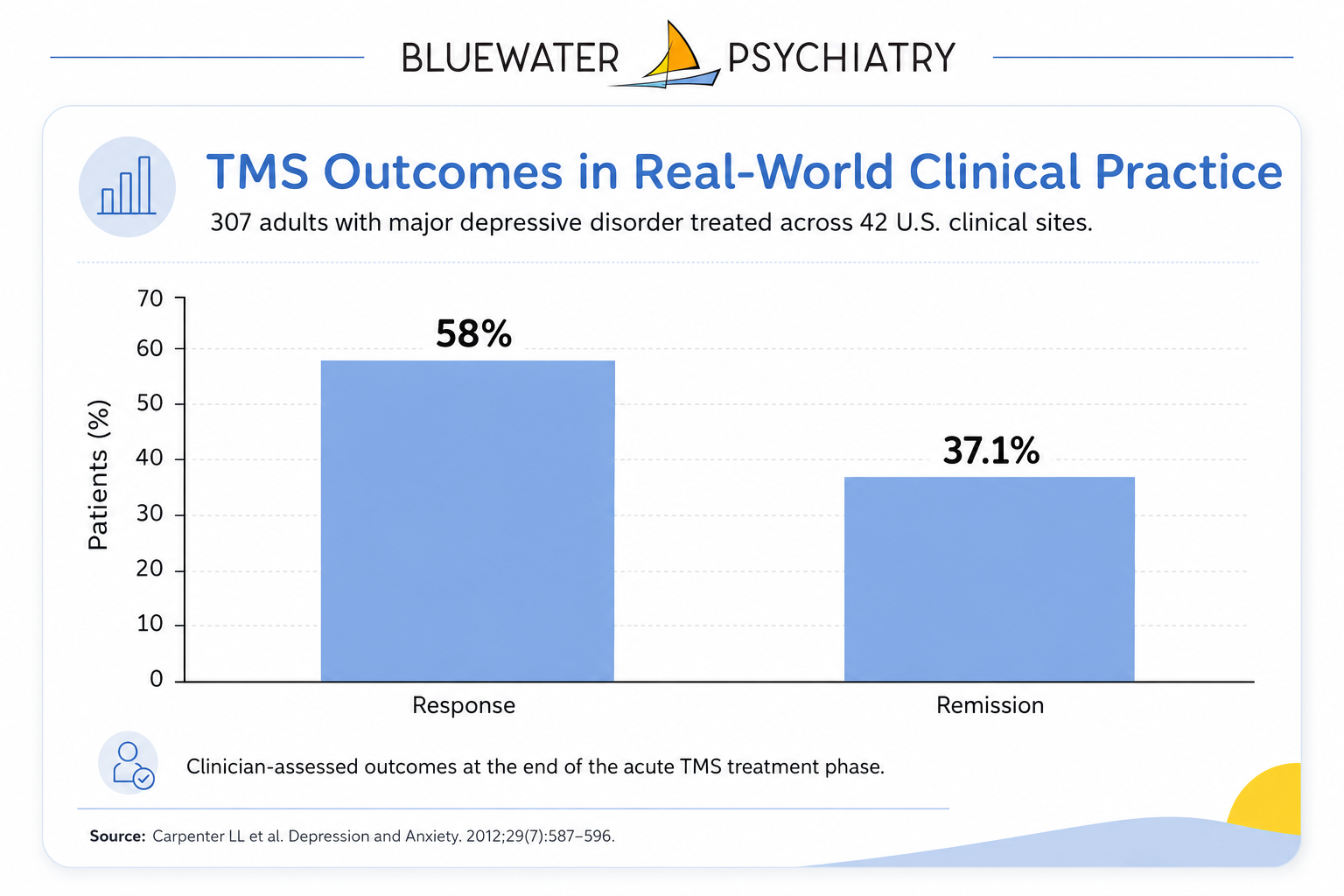
In a large study of adults with depression treated with TMS in everyday clinical settings, more than half had meaningful improvement in their symptoms. About 1 in 3 saw their depression go into remission.
Click to Expand
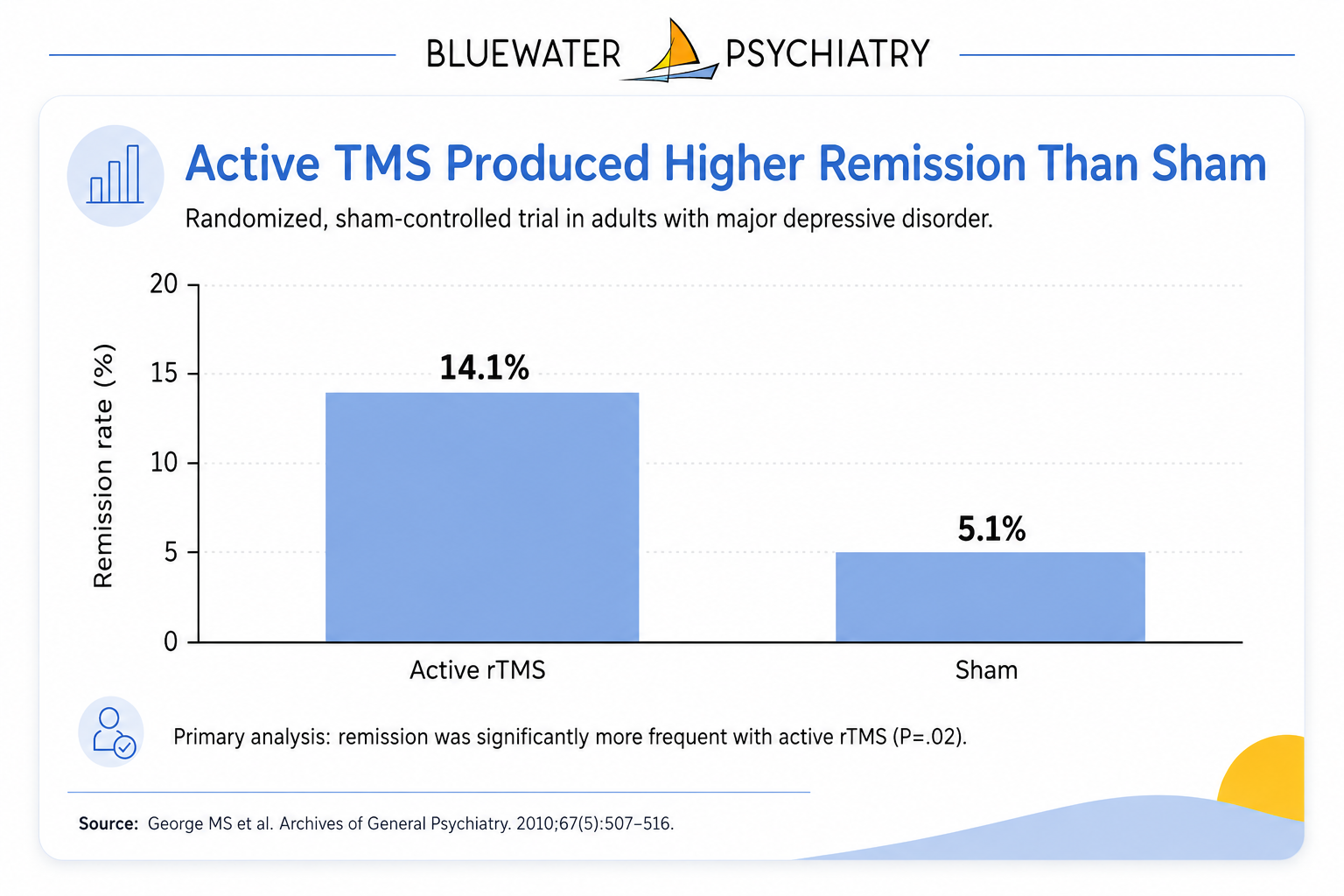
When real TMS was tested against a “fake” version of the treatment (and neither doctors nor patients knew which one they were getting), the real treatment produced remission nearly three times more often — evidence the effect isn’t just placebo.

Click to Expand
A newer, much faster version of TMS (3 minutes vs. the traditional longer session) worked just as well at reducing depression symptoms as the standard protocol — same results, far less time in the chair.
ARTICLES ABOUT TMS TREATMENT

TMS vs Spravato vs Ketamine: How We Guide You Toward the Right Path
Around 21 million Americans experience depression & about 1 in 3 don’t find relief from traditional antidepressants. Spravato can help.

Natural Treatment for Depression: Effective Alternatives to Traditional Antidepressants
Natural treatments for depression and alternative treatments like TMS and ketamine therapy can provide fast and lasting relief.

Can Depression Be Treated in 1 Day? Exploring the ONE-D TMS Protocol
ONE-D TMS is an accelerated form of TMS therapy that has shown promise in treating depression in just one session.
Request a Discovery Call
Are you a candidate for TMS or psychiatric services?
Request a Discovery Call to find out how we can help you achieve your mental, emotional, and behavioral goals.
Office Hours
Monday: 9am-5pm
Tuesday: 9am-5pm
Wednesday: 9am-8pm
Thursday: 9am-5pm

A MEMBER OF ZENCARE RHODE ISLAND